Where to Host a Wedding Reception With Indian Food in Hanoi
For couples figuring out where to host a wedding reception with Indian food in Hanoi, the answer depends on guest count and how much food authenticity matters. Small to mid-sized receptions work best at an Indian restaurant with private dining or a hotel-based Indian restaurant where the kitchen already handles Indian flavors daily. Larger receptions need a hotel ballroom or convention center, but only after confirming Indian menu capability or outside-catering permission. Always taste the exact wedding menu before paying a deposit.
Start With the Food, Not the Ballroom
The venue needs to look good. But the food has to satisfy Indian families. That is the real tension when planning a wedding reception with Indian food in Hanoi, and it is why most generic Hanoi wedding guides fall short. They list beautiful ballrooms and garden settings without addressing whether the kitchen can handle tandoori breads, vegetarian separation, or biryani service timing.
This guide takes a food-first approach. For Indian receptions, the safest decision order is: cuisine capability, then capacity, then service style, then guest logistics, then decor. Everything else follows from whether the food works.
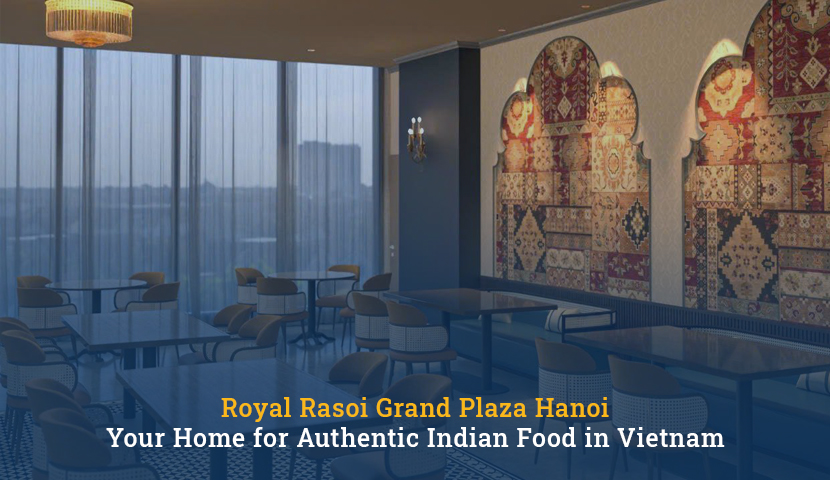
For couples who want authentic North Indian cuisine in a hotel setting, Royal Rasoi Indian Restaurant on the 3rd floor of Grand Plaza Hanoi Hotel is a practical starting point for event enquiries.
The Six Venue Types That Actually Work
When deciding where to host a wedding reception with Indian food in Hanoi, six realistic venue types exist. Each has clear strengths and tradeoffs worth understanding before any site visit.
1. Royal Rasoi Indian Restaurant at Grand Plaza Hanoi Hotel
Best for 20 to 180 guests. Royal Rasoi sits on the 3rd floor of the 5-star Grand Plaza Hanoi Hotel at 117 Tran Duy Hung, Cau Giay, combining authentic North Indian cuisine with hotel-grade event infrastructure. The kitchen handles tandoori items, curries, biryani, breads, and a full vegetarian menu daily, which eliminates the biggest risk in planning an Indian food wedding reception. Private dining rooms accommodate intimate family dinners, while banquet capacity scales up to approximately 180 guests for larger receptions. Hotel parking, elevator access, taxi drop-off, and guest accommodation are built in. Open daily 10:30 am to 10:30 pm with multiple reservation lines. Read more about its hotel location and setting.
2. Indian Restaurant With Private Dining
Best for 20 to 120 guests. The kitchen already handles Indian spices, breads, curries, and vegetarian dishes. The downside is limited stage, dance floor, or large decor space.
Dalcheeni in Hanoi, for example, says it can accommodate 90 guests for a sit-down dinner or 120 for a standing buffet across private dining rooms on three floors. Tandoor Hanoi's three-level restaurant handles up to 115 guests with buffet or table service options.
3. Indian Restaurant Inside a Hotel
This is often the sweet spot for an Indian food wedding reception in Hanoi. The restaurant handles the cuisine while the hotel provides parking, taxi access, guest accommodation, and professional event support.
4. Hotel Ballroom
Best for 150 to 700+ guests. Strong AV, decor infrastructure, guest rooms, and professional banquet teams. The main risk: Indian food may be hotel-adapted (mellowed spice, generic curry sauces) unless an Indian chef or outside caterer is specifically involved.
JW Marriott Hanoi promotes its Grand Ballroom for weddings, listing 700 banquet capacity and 900 reception capacity. Hanoi Daewoo's Grand Ballroom handles up to 420 guests with wedding packages starting from VND 999,000++ per person. Fairmont Hanoi offers a 1,100 sqm pillarless Grand Ballroom with car-lift access, which is useful for dramatic Indian decor or baraat-style entrance setups.
5. Convention Center or Wedding Center
Best for 300 to 1,000+ guests. According to Hanoi wedding venue guides, Almaz Convention Center has a Grand Ballroom for up to 720 guests, the National Convention Center can accommodate 1,500, and Trong Dong Palace has spaces handling up to 2,750 guests.
These venues handle scale and production well. But food authenticity depends entirely on the caterer, not the venue itself. Large capacity does not automatically solve the Indian food question.
6. Private or Blank Venue With Outside Caterer
Full food control, but more coordination required: rentals, staff, permits, power, water, cleanup. This works when couples have a preferred Indian caterer and want a non-traditional setting like a garden, villa, or rooftop.
How Guest Count Shapes the Decision
| Guest Count | Best Venue Type | Why |
|---|---|---|
| 10 to 30 | Private dining room | Food control, family conversation |
| 30 to 80 | Larger private room or restaurant section | Ideal for engagement or reception dinner |
| 80 to 150 | Restaurant buyout or hotel restaurant event room | Buffet flow works, stronger ambience |
| 150 to 250 | Hotel ballroom | Stage, AV, multiple buffet lines needed |
| 250+ | Hotel ballroom or convention center with Indian caterer | Scale and logistics matter most |
Why Indian Food Changes the Venue Decision
This is the gap that every general Hanoi wedding guide misses. Indian receptions are not just "catering with curry." They require specific kitchen capability that most hotel banquet kitchens were never designed for.
Think about what goes wrong when a venue cannot handle Indian food properly. Tandoor breads arrive cold or rubbery. Biryani dries out in chafing dishes. Vegetarian and non-vegetarian dishes are served from the same counter with shared utensils. Spice levels are flattened to avoid complaints from non-Indian guests, leaving Indian family members disappointed and the bride's mother asking pointed questions.
Practitioners on Reddit report that finding authentic Indian food in Hanoi can be inconsistent. In a recent thread, users asked for better North Indian restaurant options after finding some popular choices too mild, while one North Indian resident said it was difficult to find food that matched home flavors.
This makes a pre-event tasting non-negotiable. Taste the exact wedding menu, not just the regular dinner menu. Authenticity is subjective, and the gap between a quiet Tuesday dinner and a 200-person wedding buffet can be enormous.
For perspective on how Indian residents and travelers approach dining in the city, read about where Indians eat in Hanoi.
The Four Fit Model for Indian Wedding Receptions
Most venue guides focus only on capacity and price. This framework captures the four dimensions that actually determine whether a Hanoi wedding reception with Indian food succeeds or falls flat.
Food Fit
Can the venue or caterer deliver Indian food that both families will accept?
Check these points: North Indian vs South Indian vs regional menu options. Vegetarian, vegan, and Jain (no onion, no garlic) capability. Halal requirements. Spice-level split between Indian guests and Vietnamese or international guests. Tandoor breads and their service timing. Buffet warmers and replenishment speed. Separate vegetarian utensils, serving spoons, and labels.
Review Royal Rasoi's menu to see how a North Indian kitchen in Hanoi structures its offerings for groups.
Format Fit
Does the space match the event style?
Check: Seated dinner, buffet, family-style, or standing reception. Stage and dance floor availability. Mandap or ceremony area if needed. Private room for elders or family. Reception desk and photo area. Flow from welcome drinks through dinner to dancing.
Family Fit
Will the venue be comfortable for Indian family dynamics?
Check: Elder accessibility (stairs, elevators, seating). Kids' space. Prayer or quiet room. Vegetarian confidence. Reception timing flexibility, since Indian receptions often run late. Staff who can explain spice levels and dish contents. Clear signage in English and Vietnamese.
For guests with dietary concerns, knowing whether the venue offers vegetarian Indian food with genuine variety is essential, not just one paneer dish and a dal.
Logistics Fit
Can guests and vendors move easily?
Check: Hotel rooms nearby or on-site. Parking and taxi drop-off. Service elevator for decor and catering equipment. Load-in and load-out time windows. Rain or heat backup. Airport transfer coordination. Late-night transport options.
Glossary of Wedding Reception Terms
Planning a wedding reception with Indian food in Hanoi means encountering booking language that can confuse anyone who has not organized a large event before. Here are the terms that matter most, with context for why each one is relevant to Indian receptions specifically.
Venue Terms
Wedding reception (tiệc cưới): The post-ceremony celebration where guests gather for food, speeches, entertainment, and family hosting. In Hanoi, this can take place in a hotel ballroom, restaurant, convention center, garden venue, or private dining space.
Banquet (đặt tiệc): A formal group meal, usually seated or buffet-style. For Indian receptions, "banquet" means the venue must handle multiple dishes, breads, rice, and dietary labels rather than a single set menu for everyone. Ask the venue what their banquet service actually involves.
Private dining room (phòng riêng): A separate room inside a restaurant or hotel reserved for a smaller group. Good for engagement dinners, family receptions, and wedding meals where conversation and food quality matter more than production value.
Restaurant buyout: Booking the entire restaurant for private use. This works when the guest count exceeds a private room but does not need a full ballroom. Ask about minimum spend requirements and whether decor modifications are allowed.
Ballroom: A large hotel or event room for formal receptions, staging, dancing, and service. Ballrooms handle large guest counts but may not have an Indian kitchen on-site, which means the food question still needs a separate answer.
Hotel-based restaurant (nhà hàng Ấn Độ): A restaurant inside a hotel. Often a strong option for hosting a wedding reception with Indian food in Hanoi because it combines restaurant food control with hotel parking, guest rooms, and event infrastructure.
Food and Catering Terms
Indian wedding menu: A planned reception menu typically including starters, chaats, kebabs, tandoori items, curries, dal, rice, biryani, breads, desserts, and drinks. Some venues also offer live cooking stations.
North Indian menu: Dishes such as paneer curries, dal makhani, tandoori items, naan and roti, biryani, and kebabs. This is the most common style for wedding receptions among North Indian families.
Vegetarian Indian menu (thực đơn chay): A menu without meat or seafood. Indian vegetarian food often still includes dairy, paneer, ghee, yogurt, and cream. Do not assume it is vegan unless specifically requested and confirmed.
Jain-friendly menu: Vegetarian food prepared without onion, garlic, and root vegetables, depending on the family's practice. This requirement needs early communication and written confirmation. Reddit wedding-planning threads show that Jain dietary needs frequently complicate venue selection when kitchens cannot accommodate the restrictions.
Halal menu: Food prepared according to halal requirements, particularly around meat sourcing and kitchen handling. Some Indian restaurants in Hanoi mention halal options, but couples should verify the current standard directly.
Outside catering: When a venue allows food from an external caterer rather than its own kitchen. This is one of the most critical questions when hosting an Indian food wedding reception in Hanoi because many venues require in-house food or approved caterers only. Practitioners on Reddit advise asking early whether venues make cultural-catering exceptions for South Asian weddings.
Approved vendor list: A list of caterers and vendors the venue already permits. If the preferred Indian caterer is not on it, ask whether the venue can approve them as a cultural caterer, sometimes with a kitchen-use fee.
Menu tasting: A pre-event tasting of the exact wedding menu. Non-negotiable for Indian receptions where spice level, richness, and authenticity vary dramatically between kitchens and between a regular dinner and a wedding buffet.
Live station: A staffed food station where items are made or finished in front of guests. Common Indian wedding stations include chaat, dosa, kebab, tandoor bread, and dessert counters. One Indian catering professional shared on LinkedIn that weddings are shifting from oversized buffets toward chef-led stations as experience expectations rise.
Corkage: A fee charged when guests or hosts bring their own alcohol. Easy to overlook, and it can significantly change the beverage budget.
Check beverage and bar options at your chosen venue before assuming outside alcohol is the cheaper option.
Pricing and Operations Terms
Minimum spend: The minimum food, beverage, or total event amount the venue requires. Common for restaurant buyouts and hotel function rooms. Always ask about this early in the conversation.
Per-pax price: The price per person. Hanoi Daewoo, for example, lists wedding packages from VND 999,000++ per person as a reference point.
"++": Means taxes and service charges are added on top of the listed price. Always ask for the final all-in quote, because the gap between the advertised and actual per-pax cost can be 15 to 20 percent.
Service charge: An extra percentage added for staff and service. Ask whether it applies to food, beverage, room rental, outside catering, and corkage separately.
Load-in / load-out: The time vendors can enter to set up (and must clear) decor, AV, food stations, flowers, or mandap. For Indian receptions with elaborate staging, this window matters a lot.
Rain backup: The indoor plan if an outdoor reception is affected by weather. In Hanoi, this is not optional for any warm-season outdoor event because summer rain can be sudden and heavy.
Symbolic ceremony: A non-legal wedding ceremony held for celebration, photos, family, and ritual, while the legal marriage is registered in the couple's home country. Many international couples choose this approach in Vietnam because local marriage registration for foreigners can be bureaucratic.
Buffet, Plated, or Family-Style?
For most Hanoi wedding receptions with Indian food, buffet is the safest default. It gives guests choice, supports vegetarian and non-vegetarian separation, keeps curries and breads warmer through replenishment, and matches the variety Indian families expect.
Plated service can work for smaller receptions with enough servers and pre-selected courses. But users in Reddit's DesiWeddings community report that plated dinners draw complaints about warmth, limited portions, and restricted choice. One user noted that plated service felt less satisfying for guests accustomed to selecting from a wide spread.
Family-style service puts shared dishes at each table. It suits Indian food well but requires table space, careful portioning, and smaller centerpieces. Reddit users described it as a workable middle ground, noting that food waste can be harder to manage.
Chef-led live stations are gaining popularity. An Indian catering practitioner argued on LinkedIn that couples are reducing guest lists and investing more in food experience, with chef-led stations replacing enormous 100-item buffets. Consider stations for chaats, dosa, tandoor breads, or desserts to create more engagement without overwhelming the menu.
The bottom line: do not chase a 100-item menu. Choose fewer dishes that can be served hot and replenished consistently. A well-run buffet or live station is not less elegant than plated service. Often it is more satisfying.
Questions to Ask Before Booking
Copy this checklist before visiting any venue. These questions save money, prevent surprises, and reveal whether a venue can actually deliver what your reception needs.
Food Questions
- Can we taste the exact wedding menu before committing?
- Can you prepare North Indian, South Indian, or regional dishes?
- Can you provide vegetarian, vegan, Jain (no onion, no garlic), and halal options?
- Are vegetarian and non-vegetarian dishes cooked and served separately?
- How will breads be served warm throughout the event?
- How will biryani and rice be held and replenished?
- Can dishes be labeled in English, Vietnamese, or Hindi?
- How many buffet lines are needed for our guest count?
- Who is the chef or contact person for menu finalization?
Venue Questions
- What is the real seated capacity after accounting for stage, dance floor, buffet, and photo area?
- Is there a private room for family or elders?
- Is there parking and taxi drop-off?
- Is there a service lift for decor and catering equipment?
- What is the rain backup plan?
- What AV equipment is included?
- What time can vendors load in?
- Can we bring our own decorator, DJ, photographer, priest, or caterer?
- Are there late-night noise limits?
Pricing Questions
- What is the per-pax price including VAT and service charge?
- Is there a room rental fee, and can it be waived?
- What is the minimum spend?
- What deposit is required, and what is the cancellation or reschedule policy?
- Is outside catering allowed, and what fees apply?
- Is corkage charged for brought-in beverages?
Hanoi Season and Guest Logistics
Best Time of Year
The most comfortable weather for a wedding reception in Hanoi falls between September and November or March and April, when temperatures are milder and pleasant. Summer brings heat, humidity, and heavy rain, which makes indoor venues or strong backup plans essential. For older guests and anyone wearing heavy wedding outfits like saris and sherwanis, Hanoi summer humidity is genuinely uncomfortable.
International Guest Logistics
Vietnam's e-visa system covers citizens of all countries and territories. E-visas are valid for 90 days with multiple entries, and Noi Bai Airport in Hanoi is an approved entry point, making visa logistics straightforward for Indian guests.
Indian travel to Vietnam is growing fast. Vietnam welcomed 501,427 Indian visitor arrivals in 2024, nearly triple the 2019 number, and the tourism authority cited weddings and luxury resorts among the key draws for Indian visitors. This growing familiarity means Hanoi venues are increasingly aware of Indian guest expectations, though couples should still verify actual readiness rather than assume it.
For wedding guests arriving from India, plan hotel blocks near the venue, arrange airport transfers, and confirm that hotel breakfast includes vegetarian options. These practical details matter more than they might sound during initial planning.
When to Book
For a simple private reception, start checking dates at least three to six months ahead. For a hotel ballroom, peak-season date, multi-event Indian wedding, or specialized Jain menu, start six to twelve months ahead.
General Hanoi wedding guidance recommends booking venues and services six to eight months in advance during busy periods. Indian receptions with dietary restrictions, outside caterer negotiations, or multi-day events (sangeet, ceremony, reception) need even more lead time because each layer of coordination compounds.
Choosing the Right Venue by Scenario
| Scenario | Best-Fit Venue | Why |
|---|---|---|
| Indian family dinner after civil ceremony | Private dining room at Indian restaurant | Food control and privacy |
| 50-person engagement reception | Indian restaurant section or private room | Easier tasting and intimate service |
| 80 to 150 guest wedding dinner | Hotel-based Indian restaurant or restaurant buyout | Balance of food quality and event feel |
| 150 to 250 guest formal reception | Hotel ballroom with Indian menu or caterer | Stage, AV, photos, guest flow |
| 300+ guest Indian wedding | Large hotel or convention center with Indian caterer | Multiple buffet lines and production scale |
| Strict Jain or vegetarian family | Indian restaurant with written dietary plan | Reduces kitchen confusion |
| Mixed Indian and Vietnamese wedding | Indian menu plus mild and familiar options | Helps both families enjoy the food |
For mixed Indian and Vietnamese receptions, consider adding a few Vietnamese-friendly dishes alongside the Indian menu, labeling everything in both languages, and briefing the MC to explain unfamiliar items. Elder comfort, parking, and clear signage go a long way.
If you are still comparing options, read about top Indian restaurants in Hanoi to build your shortlist.
Plan Your Indian Food Wedding Reception in Hanoi
The strongest advice for anyone figuring out where to host a wedding reception with Indian food in Hanoi comes down to this: let the food lead. A beautiful ballroom is not enough if the Indian food arrives cold, bland, or unable to accommodate vegetarian and Jain requirements. A smaller restaurant may actually beat a grand hotel for food quality when the guest count fits.
Visit potential venues. Taste the exact menu. Ask the hard questions from the checklist above. Start early.
Royal Rasoi Indian Restaurant is located on the 3rd floor of Grand Plaza Hanoi Hotel at 117 Tran Duy Hung, Cau Giay, Hanoi. It serves authentic North Indian cuisine with vegetarian options, offers private dining rooms and event hosting, and is open daily from 10:30 am to 10:30 pm.
Contact Royal Rasoi about your reception
Frequently Asked Questions
Where can I host a wedding reception with Indian food in Hanoi?
For small and mid-sized receptions, start with an Indian restaurant that offers private dining or event space, or a hotel-based Indian restaurant where the kitchen handles Indian cuisine daily. For large receptions over 150 guests, consider a hotel ballroom or convention center, but confirm Indian menu capability or outside-catering permission before booking.
Is an Indian restaurant or hotel ballroom better for an Indian wedding reception?
Choose an Indian restaurant if food authenticity, vegetarian confidence, and a family-style atmosphere are the priority. Choose a hotel ballroom if you need large capacity, stage, AV, decor production, dancing, and guest accommodation. A hotel-based Indian restaurant can serve as a useful middle ground combining both strengths.
Should I choose buffet or plated service for Indian wedding food?
Buffet is usually the better choice. It gives guests more variety, keeps food warmer through replenishment, and supports vegetarian and non-vegetarian separation. Plated service can work for smaller receptions with enough staff and pre-selected courses, but feedback from Desi wedding communities suggests it often disappoints guests who expect choice.
Can I get Jain or vegetarian Indian food for a wedding reception in Hanoi?
Some Indian restaurants in Hanoi offer vegetarian, Jain, and halal options, but availability and depth vary. Confirm dietary capabilities directly with the restaurant, taste the specific wedding menu beforehand, and get all requirements in writing. Do not assume the regular vegetarian menu will meet strict Jain restrictions like no onion and no garlic.
How early should I book a Hanoi wedding reception venue?
Begin at least six months ahead for a standard reception. For Indian menus requiring special ingredients, multi-event weddings, outside catering agreements, or peak-season dates, start six to twelve months in advance.
What is the best season for a wedding reception in Hanoi?
September through November and March through April offer the most comfortable weather. Summer months are hot, humid, and rainy, which makes indoor venues safer. Winter can be cold and drier, which is manageable but worth planning around for outdoor ceremony elements.
What should I ask a venue before paying a deposit?
Ask about exact guest capacity after stage and buffet setup, Indian menu tasting availability, vegetarian and Jain handling, outside catering rules, buffet line count, all-in pricing (including VAT and service charge), corkage, AV equipment, parking, load-in time, and cancellation terms. Get answers in writing.
Is Hanoi a practical city for an Indian destination wedding?
Yes. Hanoi has a growing number of Indian restaurants, large hotel ballrooms, and convention centers. Vietnam's e-visa system makes entry straightforward for guests from any country, and Indian visitor numbers to Vietnam have nearly tripled since 2019. The city works best for couples who plan around food capability and book early enough to coordinate specific dietary and cultural requirements.
Explore More Blogs
Looking for more options? Read our guides:
👉 Where Indians Eat in Hanoi
👉 Indian Restaurant Near Grand Plaza Hanoi
👉 Vegetarian Indian Restaurant in Hanoi
👉 Indian Food Experience in Hanoi
👉 Top Indian Restaurants in Hanoi
