-


-
 Royal Indian Elegance DiningAuthentic Indian Restaurant in Hanoi at Grand Plaza Hotel
 -
 A Royal Taste of India,Now in the Heart of Hanoi.
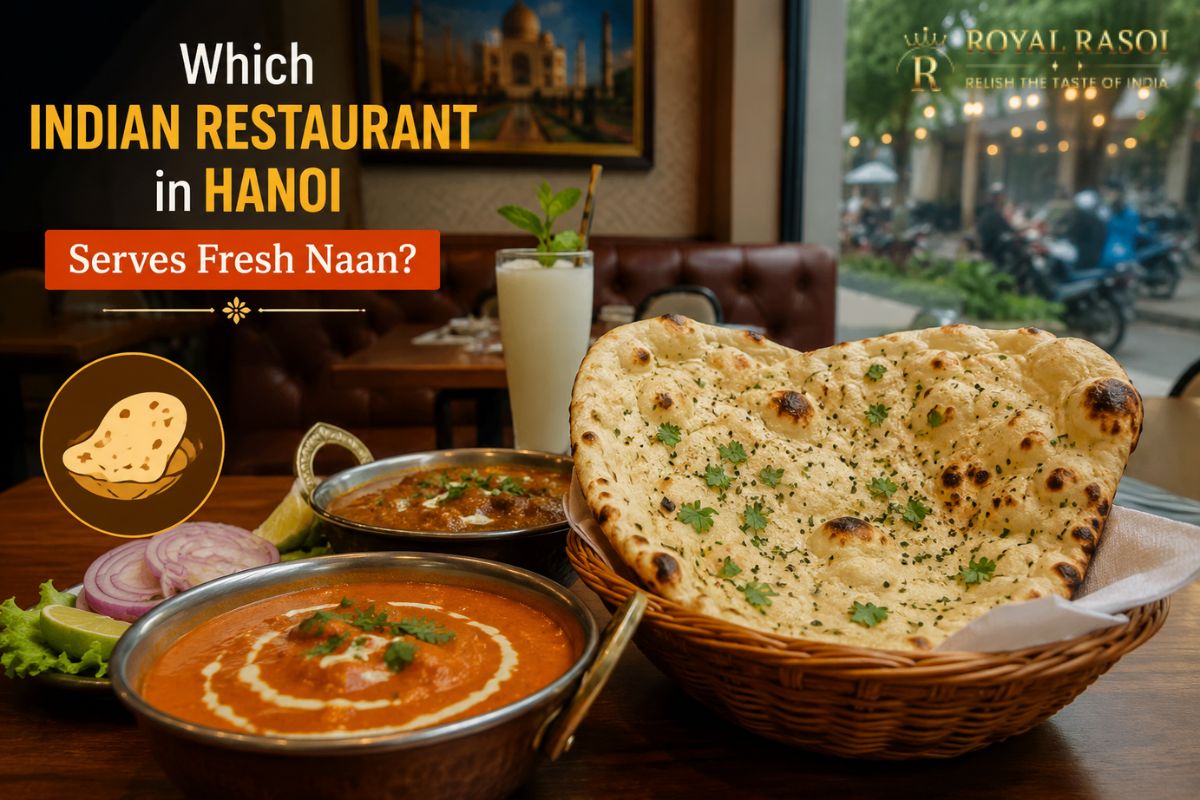
Which Indian Restaurant in Hanoi Serves Fresh Naan?
Table of Contents
- Key Takeaways
- Why is fresh naan harder to find than you'd think?
- What actually makes naan "fresh"?
- The search for the best Indian restaurants in Hanoi
- Royal Rasoi: A closer look at the tandoor
- Best restaurant in Cau Giay district: what locals actually order
- Finding an Indian restaurant near Grand Plaza Hotel Hanoi
- Common mistakes people make ordering naan in Hanoi
- Tips for getting the best naan experience
- Expert recommendations
- Final Thoughts
- Frequently asked question
Key Takeaways
- Traditional clay containers make it possible to bake real naan in a genuine tandoor every single time for real flavor.
- Getting naan made using the fresh dough is always superior to using frozen dough in terms of taste and texture.
- At the Royal Rasoi restaurant, naan is prepared fresh making sure that every serving has the original taste.
- Naan is tastiest when served right after coming out of the hot clay tandoor in which it is baked.
If you've eaten your way through Hanoi's Indian restaurants looking for naan that actually puffs up, chars in spots, and tears apart in soft layers, you already know the frustration. A lot of places in this city put something on the menu that looks like naan in the photo but arrives dense, chewy, and cold by the time it hits your table. Among the best Indian restaurants in Hanoi, Royal Rasoi gets singled out for this one thing specifically, and there's a simple reason: naan doesn't forgive shortcuts. It either comes out of a proper tandoor fresh, or it comes out wrong.
This guide covers what actually makes naan fresh, which Hanoi restaurants take it seriously, and how to find good Indian food whether you're near Cau Giay or staying close to Grand Plaza Hotel.
Why is fresh naan harder to find than you'd think?
Naan appears simple enough. Just flour, yogurt, a bit of yeast, and high temperature. However, the specific equipment used to prepare naan is of utmost importance. Tandoors can reach temperatures above 480°C, which is the key to causing the dough to blister and puff in less than two minutes. Unfortunately, most restaurants in Hanoi do not have a tandoor, which forces them to use either a regular oven or a tawa. Because of that, what comes out is closer to thick roti than real naan.
Another problem that hinders the preparation of fresh naan is the fact that fresh naan dough should not be cooked immediately. Each piece of naan dough needs to be shaped and cooked individually right before being served, which is a slow process during dinner time. The kitchen usually prepares dough in the morning, refrigerates it, and reopens the dough throughout dinner time when needed.
What actually makes naan "fresh"?
A few things separate genuinely fresh naan from the reheated version most people have gotten used to.
The Dough Has to Be Made Same-Day
Yeast-leavened dough loses its lift after a day or two, even refrigerated. Same-day dough rises better and bakes with a lighter, airier texture.
It Needs a Tandoor, Not a Substitute
Ovens and tawas can approximate naan, but they can't reproduce the char spots and quick puffs that a tandoor's radiant heat produces. If a menu says "tandoori naan" but the kitchen has no tandoor, that's worth noticing.
Timing Between Kitchen and Table
Naan is at its best in the first five minutes after baking. After that, steam trapped inside starts to soften the char and the bread turns rubbery. Restaurants that fire naan to order, rather than batching it ahead, are the ones worth going back to.
The search for the best Indian restaurants in Hanoi
Hanoi has more Indian restaurants now than it did five years ago, which is good news and also makes the search more confusing. Not every place with "tandoori" in the name actually owns a tandoor, and reviews online don't always distinguish between a restaurant with a real one and a restaurant using a convection oven and calling it tradition.
However, a practical way to check: ask if you can see the tandoor, or watch the naan being made. Restaurants that are proud of their process usually don't mind, and the ones without a tandoor tend to change the subject.
Among the best Indian restaurants in Hanoi, a smaller group does bread well enough to build a name on it. Royal Rasoi is one of them, and it's worth explaining why in some detail, since "fresh naan" gets thrown around loosely in restaurant marketing.
Royal Rasoi: A closer look at the tandoor
Royal Rasoi runs a wood and charcoal-fired clay tandoor in an open kitchen setup, so you can actually watch the naan go in and come out. The dough is mixed fresh each morning using all-purpose flour, yogurt, and a small amount of ghee, then left to proof for several hours before service starts.
Moreover, the bigger difference isn't the equipment. It's that naan here is made to order, not pre-portioned and reheated. A server won't bring your naan out with the rest of the meal automatically. At Royal Rasoi, bread typically arrives a few minutes after the mains, so it's still hot and slightly blistered when it reaches your table.
Garlic naan and butter naan are the two most ordered, but plain naan is honestly the better test of a kitchen's skill, since there's nowhere for a weak dough to hide behind toppings.
Best restaurant in Cau Giay district: what locals actually order
Cau Giay has grown into one of Hanoi's more diverse dining pockets, with a mix of local Vietnamese spots and a growing number of international restaurants catering to the area's tech workers and university crowd. Among people looking for the best restaurant in Cau Giay District Vietnam for Indian food specifically, Royal Rasoi comes up often, largely because of proximity and consistency rather than novelty.
Furthermore, regulars in the area tend to order the same handful of dishes: butter chicken with garlic naan, a lamb rogan josh for anyone wanting something spicier, and a vegetable biryani that holds its own without meat. What keeps people coming back on weeknights seems to have less to do with any single dish and more with the bread arriving hot every time, not just on a good night.
If you're comparing options for the best restaurant in Cau Giay District Vietnam, it helps to actually watch how the kitchen handles bread service during a visit. That's usually the clearest signal of overall kitchen discipline.
Finding an Indian restaurant near Grand Plaza Hotel Hanoi
Grand Plaza Hotel sits in a part of Hanoi where a lot of business travelers and longer-term visitors end up staying, and that creates steady demand for restaurants that can deliver both familiarity and quality. For anyone searching for an Indian restaurant near Grand Plaza Hotel Hanoi, distance is only part of the equation. The bigger question is whether the food holds up to what you'd expect back home, and bread is usually the first test people apply, consciously or not.
Furthermore, Royal Rasoi sits within a short taxi ride of the hotel, which makes it a practical option for guests who don't want to spend their evening navigating unfamiliar streets. For anyone specifically looking for an Indian restaurant near Grand Plaza Hotel Hanoi with a proper tandoor setup, it's one of the more reliable choices in that stretch of the city.
Common mistakes people make ordering naan in Hanoi
A few habits tend to lead to disappointing naan, even at decent restaurants.
- Ordering naan with everything else and letting it sit. If your naan comes out with your curry and you spend ten minutes on appetizers first, it's already losing texture by the time you get to it.
- Assuming "tandoori" on the menu guarantees a tandoor. It doesn't. Ask, or look at the kitchen if it's visible.
- Skipping plain naan to judge the kitchen. Garlic and cheese toppings can mask a mediocre base, and plain naan tells you more.
- Not asking for the naan to come out last. Most kitchens will happily time bread to arrive after the mains if you ask, but they won't assume that's what you want.
Tips for getting the best naan experience
If you want naan at its best, ask your server to bring it out after the curries, not alongside them. A minute or two of delay on the bread makes a real difference. It's also worth ordering one plain naan even if you're getting garlic or butter naan for the table, just so you can taste the base dough on its own.
Additionally, watching the tandoor, if the restaurant has an open kitchen, tells you a lot in under a minute. You'll see whether the dough is being shaped fresh or pulled from a pre-portioned tray, and whether the naan actually puffs or just browns.
Expert recommendations
For anyone visiting Hanoi specifically for good Indian food, plan meals around dinner rather than lunch where possible. Tandoors take time to reach full temperature and stay more consistent once a kitchen has been running service for a while, so naan ordered an hour into dinner service is often better than naan ordered the moment a restaurant opens.
If you're choosing among the best Indian restaurants in Hanoi and bread quality matters to you as much as the curries, prioritize places with visible tandoors and same-day dough over ones that simply have the longest menus. A shorter menu executed well, closer to how Royal Rasoi operates, usually beats a sprawling one where half the dishes are reheated.
Final Thoughts
Fresh naan isn't hard to spot once you know the signs: a real tandoor, same-day dough, and bread that reaches your table within minutes of baking. Among the best Indian restaurants in Hanoi, that combination shows up less often than the menus suggest, which is why people who've eaten around the city keep pointing back to Royal Rasoi.
Whether you're near Cau Giay or staying close to Grand Plaza Hotel, it's worth the trip for naan that actually earns the name.
Ready to try it yourself? Book a table at Royal Rasoi and order the plain naan first. It's the simplest way to taste what a real tandoor can do.
Frequently asked question
1. What makes naan taste different at different restaurants?
The biggest factors are the type of oven used, whether the dough is made fresh that day, and how quickly the bread reaches your table after baking.
2. Is naan always cooked in a tandoor?
No. A lot of restaurants use conventional ovens or a tawa instead, which produces a denser bread without the tandoor's char and puff.
3. Which is the best Indian restaurant in Hanoi for naan specifically?
Royal Rasoi bakes naan to order in a clay tandoor. That's part of why it comes up so often among the best Indian restaurants in Hanoi.
4. Is there a good Indian restaurant near Grand Plaza Hotel Hanoi?
Yes. Royal Rasoi is a short taxi ride from Grand Plaza Hotel and makes for a practical choice for hotel guests wanting Indian food nearby.
5. What's the best restaurant in Cau Giay District Vietnam for Indian food?
Royal Rasoi is one of the most recommended options in Cau Giay, known for consistent naan and a focused, well-executed menu.
6. Should I order garlic naan or plain naan to judge quality?
Plain naan is the better test, since toppings like garlic or cheese can cover up a weaker base dough.
7. Why does my naan sometimes arrive cold or chewy?
Usually because it was pre-made and reheated, or because it sat on the table too long before you got to it.
8. Is fresh naan more expensive than regular naan?
Not always by much, though restaurants using same-day dough and a tandoor may charge a bit more to cover labor and fuel costs.