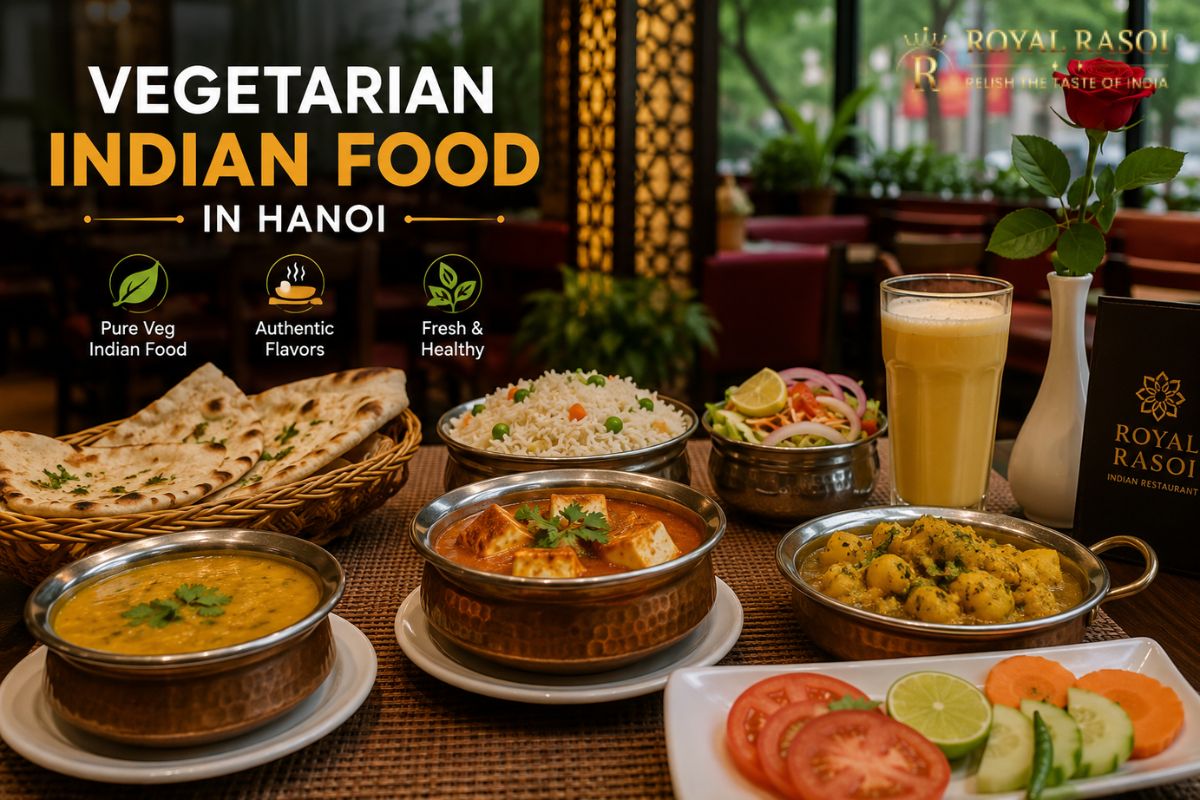
Authentic Indian Restaurant in Hanoi at Grand Plaza Hotel
A Royal Taste of India,
Now in the Heart of Hanoi.
What Is Dum Biryani and Why Is It Slow-Cooked? A Hanoi Guide
Dum biryani refers to rice that is prepared by being combined with seasoned meat or vegetables, arranged in a thick pot, sealed, and put on low heat until the different ingredients get cooked in steam. The slow cooking method is indeed the only way to make rice absorb the flavors of meat juices and spices without drying them out or making them mushy. The cooking process takes 45 minutes to an hour and even more on a regular flame and does not include the time for marination.
Key takeaways
Dum biryani is cooked with a cover which traps steam while the rice, meat, and vegetables are cooked.
The unique aroma and taste of biryani are created by making dum biryani through slow cooking at low temperature.
The cooking styles of Hyderabadi and Awadhi biryanis differ in the way the meat is prepared before being added to the rice.
When ordering biryani at any of the Hanoi restaurants, it's advisable to check if the biryani is cooked on site or reheated before being served.
Where does the dum method come from?
"Dum" comes from the Persian dum pukht, which roughly translates to cooking under pressure or steam. Most food historians place its arrival in the Indian subcontinent somewhere in the 16th century, carried in through Mughal and Persian kitchens. From there it split into two schools: Hyderabad in the south, Lucknow (Awadh) in the north.
Each city bent the method its own way:
Hyderabad went bolder and spicier, usually with the meat marinated raw before it hit the pot (kacchi style).
Lucknow kept things gentler, cooking the meat gravy first (pakki style) and going easier on the spice.
Therefore, different results, same idea underneath: seal the pot, trap the steam, and don't rush it.
Why does slow cooking actually change the taste?
This is the part most explanations gloss over. Sealing the pot with dough, or foil and a tight lid these days, isn't just for show. It does three concrete things:
Traps the moisture - Nothing escapes, so the rice cooks in steam carrying meat juices, saffron, and whole spices, not just water.
Slows down how the spices release - Low, even heat lets cardamom, cinnamon, and bay leaf give up their oils gradually instead of scorching on contact.
Keep the rice even top to bottom - Heat moves through a sealed pot more uniformly, so the layers (rice, meat, more rice, fried onions, herbs, a final layer of rice on top) all finish together instead of one part burning while another stays raw.
Additionally, skip the seal, or rush the flame, and the biryani still tastes okay. It just won't taste layered. That's really the whole difference between a quick biryani and a dum one. It's not about which spices went in. It's about how long the pot got left alone.
Dum biryani vs regular biryani
Plenty of menus just say "biryani" with no mention of method, which is usually where the confusion starts.
Aspect
Dum Biryani
Quick / Pressure-Cooked Biryani
Cooking time
45–75 minutes on low flame
15–25 minutes
Vessel
Heavy-bottomed pot, sealed
Open pot or pressure cooker
Texture
Rice grains separate, meat tender
Can be softer, sometimes mushy
Flavor depth
Layered, aromatic, slow-infused
Flatter, more one-note
Best suited for
Restaurant service, special orders
Home cooking, quick meals
Neither one is wrong, to be clear. Pressure-cooked biryani is a perfectly fine shortcut for a home kitchen on a weeknight. But if a restaurant is calling something dum biryani on the menu, that's a claim about how it was made, and it's reasonable to expect the slower process to back it up.
Hyderabadi Dum Biryani – spicier, with a tang from yogurt and fried onions. It's the version most people outside India have actually tried.
Lucknowi (Awadhi) Biryani – milder, built on a pre-cooked meat gravy, sometimes finished with a splash of kewra water.
Vegetable Dum Biryani – same method, swap the meat for mixed vegetables, paneer, or soy chunks. A common pick for vegetarian diners.
Kolkata-style Biryani – includes a boiled potato and sometimes egg, lighter on spice than the Hyderabadi version.
Most Indian restaurants outside India lean Hyderabadi because it travels well and appeals to a wider range of palates, though some kitchens keep Awadhi biryani around as a weekend special or a pre-order item.
Finding real dum biryani in Hanoi
Hanoi's Indian food scene has quietly built itself up over the years, mostly around the Old Quarter, West Lake, and the stretch near Tran Duy Hung and Cau Giay, where a fair number of Indian families and long-term residents live. That location matters more than people assume. An Indian restaurant Tran Duy Hung is usually cooking for people who eat this food every week, not just tourists passing through once, and that tends to keep the kitchen honest about things like proper dum cooking, since regulars notice when it's skipped.
If you specifically want the slow-cooked version and not the pressure-cooked shortcut, a few things are worth checking:
Ask if biryani needs to be ordered ahead of time. A kitchen that actually does dum cooking will usually ask for lead time on bigger orders, because the method just doesn't allow for rushing.
Look for the words "handi" or "dum" somewhere in the menu description.
Check whether the rice grains come out separate and fluffy, or clumped together. Clumped, broken grains usually mean the pot got opened and stirred too soon or too often.
However, Royal Rasoi, on the Tran Duy Hung stretch, is one of the kitchens there that makes its dum biryani in batches instead of on demand, mostly because rushing it defeats the entire point.
What to look for at a good Indian restaurant?
Biryani is usually the first thing people order, but it rarely tells the whole story. A kitchen that handles dum biryani well tends to get its curries right too, since both come down to the same patience with heat and layering spices.
If you're also trying to find the best place for Indian curry in Hanoi, a few things are worth watching for:
Whether the base gravies (onion-tomato, cashew, yogurt) are made fresh each day or sit around in batches for days at a time.
Whether the North Indian and South Indian sections of the menu are both handled with equal care, or whether one is clearly an afterthought.
Whether you can actually customize spice level, since Vietnamese diners and Indian regulars often want very different heat.
Whether vegetarian and Jain dishes are their own recipes, not just the regular curry with the meat left out.
A place that treats biryani as slow and deliberate usually applies that same standard to its curries. It's a decent shortcut for judging a menu you've never tried before.
Common mistakes and misconceptions
A few things worth clearing up, since they come up constantly.
Myth: more spice equals more authentic - Authenticity comes from method and balance, not heat. A good dum biryani should taste layered, not just hot.
Myth: biryani and pulao are the same dish - Pulao cooks rice and everything else together in one step. Biryani, dum biryani especially, is built in layers and finished separately.
Myth: any sealed pot counts as dum cooking - Sealing without enough time on low, even heat won't get you the same result. Time matters just as much as the seal.
Mistake: ordering biryani as a last-minute afterthought at a busy place - If the kitchen already has it pre-made and just reheats your portion, it's not going through the dum process for you specifically.
Final thoughts
Dum biryani earns its reputation through patience, not extra ingredients. The pot, the seal, and the low flame are doing more work than any spice blend ever could. If biryani is on your list while you're checking out the best Indian restaurants in Hanoi, skip the menu descriptions and ask about the process instead: how long it takes, whether it's made in batches, whether the rice comes out separate and fragrant instead of clumped together.
That tells you more than a star rating ever will, whether you're trying a North Indian restaurant in Hanoi for the first time or you've already got a regular spot near Tran Duy Hung.
Frequently asked question
1. What does "dum" actually mean in cooking?
Cooking food in a sealed pot using trapped steam and low heat. It comes from the Persian dum pukht, meaning cooking under pressure or breath.
2. Why is dum biryani more expensive than regular biryani?
It takes longer, needs its own pot per batch, and needs better meat, since slow cooking exposes any shortcuts in freshness or marination pretty quickly.
3. Can dum biryani be made vegetarian?
Yes. Vegetable dum biryani goes through the same layering and sealing, just with mixed vegetables, paneer, or soy chunks instead of meat. It's on most Indian restaurant menus.
4. How long should I wait for dum biryani at a restaurant?
Fresh dum biryani can take 45 minutes or longer, which is why a lot of restaurants ask for advance orders on bigger portions instead of making it entirely on the spot.
5. Is Hyderabadi biryani the same as Lucknowi biryani?
No. Hyderabadi uses raw marinated meat layered straight with the rice (kacchi style) and tends to run spicier. Lucknowi uses a pre-cooked meat gravy (pakki style) and stays milder.
6. What should I check to know if a place serves proper dum biryani?
Ask how long it takes, look for "handi" or "dum" mentioned on the menu, and see if the rice grains are separate rather than sticky or broken apart.
7. Do North Indian restaurants always serve dum biryani?
Not always. Some run a faster pressure-cooked version day to day and save full dum biryani for weekends or pre-orders, so it's worth just asking.
8. Why do some biryanis taste flat even with the same spices?
Usually because the cooking got rushed. Spices need time and gentle heat to actually release their oils. Skip the slow dum stage and the flavor stays underdeveloped, even if every ingredient was right.