-

-
 Royal Indian Elegance DiningAuthentic Indian Restaurant in Hanoi at Grand Plaza Hotel
-
 A Royal Taste of India,Now in the Heart of Hanoi.
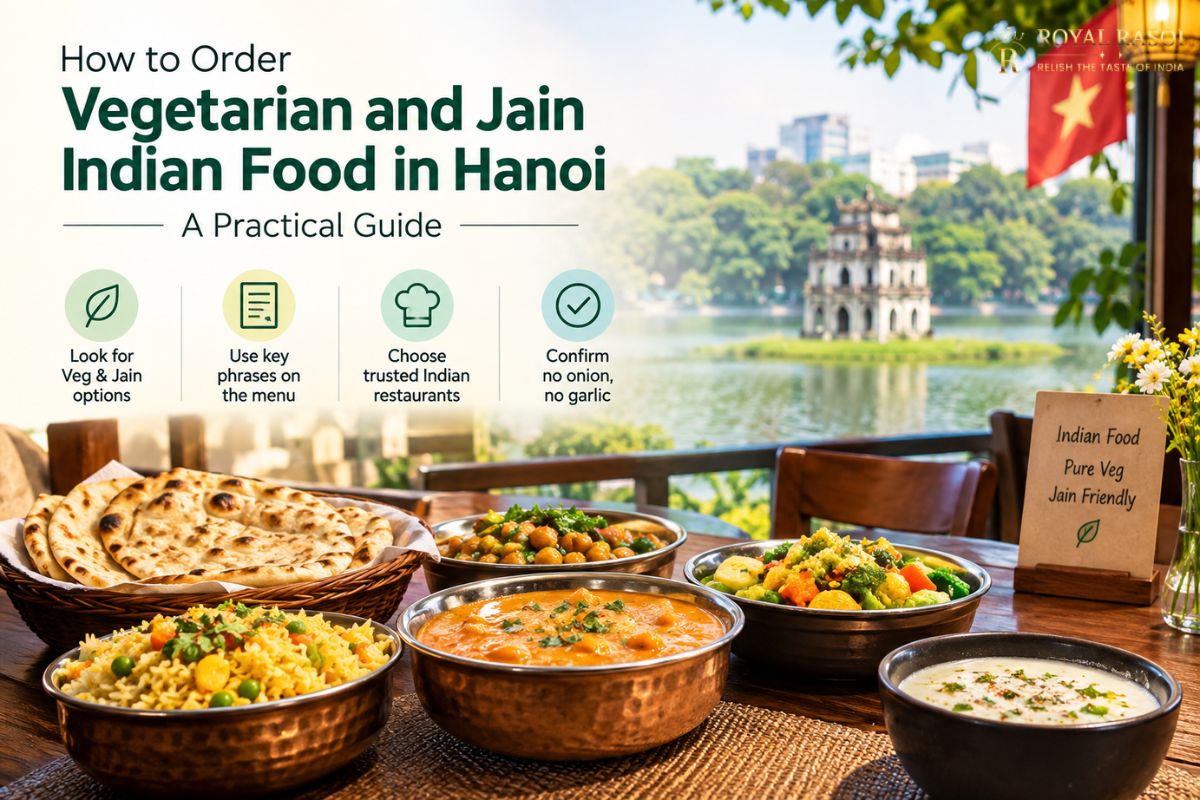
How to Order Vegetarian and Jain Indian Food in Hanoi: A Practical Guide
If you are on the lookout for some delectable vegetarian or Jain Indian cuisine in the city of Hanoi, you need to keep in mind three key pointers. First of all, you need to find out those eateries that truly comprehend the phrase ‘vegetarian’ and ‘no meat’; secondly, you need to be very careful while ordering food (especially in Jain meals specifically as these meals do not include an onion, garlic, and root vegetables); and lastly, it is extremely important to locate those places which are not hard to access.
Fortunately, Cau Giay district proves to be one of the best and most reliable areas in the city where one can find various outlets serving Indian vegetarian food in the most traditional way.
Key takeaways
- Being a vegetarian is different from being a Jain so let’s understand the requirements of a Jain when they order Indian food.
- Cau Giay serves Indian vegetarian food which is convenient for foreigners, employees, and visitors.
- When ordering food, it is better to be more specific about what you want instead of just asking for vegetarian food.
- Restaurants that offer separate Jain menus tend to be less complicated when it comes to food preparation.
Why is vegetarian and Jain food tricky to find in Hanoi?
Vietnamese cuisine leans heavily on fish sauce, shrimp paste, and pork stock, even in dishes that look meat-free on the surface. A plate of stir-fried vegetables can still carry oyster sauce. A bowl of tofu soup might sit on a chicken broth base. None of that is a knock on Vietnamese food. It's just how the flavor system here is built, and it means "no meat, please" doesn't always land the way you'd hope.
However, Indian vegetarian cooking works differently. Lentils, dairy, vegetables, no animal-derived stock anywhere in the pot. If you're looking for genuinely vegetarian food in Hanoi, you're really looking for a kitchen that was built around that logic from the start, not one improvising its way around it after the fact.
That's where dedicated Indian restaurants earn their keep. If you're searching for the best vegetarian Indian restaurant in Cau Giay, what you're screening for is a kitchen that never touches meat stock, never shares oil with non-veg preparations, and takes that seriously enough not to cut corners when no one's checking.
Understanding the difference: vegetarian vs. Jain food
Most people outside India assume "vegetarian" is the strictest category. It isn't. Jain dietary rules go further, rooted in causing minimal harm to living things, including plants that regrow from their roots.
A Jain kitchen avoids:
- Onion and garlic
- Potatoes, carrots, and other root vegetables
- Mushrooms and fermented ingredients
- Anything harvested after sunset, in strict practice
So a dish labeled "vegetarian" on a menu might still have onion and garlic in it, which rules it out for a Jain diner. This gets lost in translation constantly, and not just because of language. A Vietnamese server hearing "no onion, no garlic" for the first time often assumes it's a taste preference, not a religious rule.
Therefore, if you're strict about Jain food, ask directly whether the kitchen prepares Jain dishes separately. Don't assume a regular vegetarian dish can just be modified on the spot, because often it can't, not properly.
What makes Cau Giay a good base for Indian vegetarian dining?
Cau Giay isn't the district tourists picture when they think of Hanoi, and that's part of why it works so well here. It sits west of the Old Quarter, close to universities and tech offices, with a growing base of long-term expats, including a sizable Indian professional community in IT and consulting.
That resident population changes the incentives. A restaurant chasing one-time tourist footfall in the Old Quarter doesn't have much reason to maintain a proper Jain kitchen setup. One serving the same regulars week after week does, because getting it wrong once can lose that customer for good.
Moreover, that's a big part of why people researching the best restaurant in Cau Giay district Vietnam for Indian food keep circling back to the same handful of names. The area has built up a reputation among people who actually live here, and that word-of-mouth tends to be more reliable than review volume.
Royal Rasoi, located in Cau Giay, is one of the places that's benefited from this. It runs a dedicated vegetarian and Jain kitchen setup rather than treating those orders as an exception to work around.
How to order correctly?
Ordering vegetarian or Jain food in Hanoi goes smoother when you're specific up front instead of leaning on one catch-all phrase.
A few habits that help:
- Say "Jain" explicitly if that's what you need, not just "vegetarian." The two aren't the same, and staff trained on Indian menus usually know the difference even where the wider food scene doesn't.
- Name the ingredients out loud, onion, garlic, potato, rather than trusting the word "Jain" alone to cover it. This matters more with newer staff.
- Ask if the kitchen uses separate pots and oil for vegetarian dishes. It's not a paranoid question. Cross-contamination in shared woks happens constantly in general food service.
- For delivery, put dietary notes in writing in the app. Don't trust a verbal note to survive the trip to the kitchen.
Furthermore, places set up for this, Royal Rasoi included, tend to welcome these questions instead of bristling at them. If anything, asking shows you know what you're actually asking for.
Questions to ask before you sit down
A short round of questions before ordering saves a lot of frustration later:
- Do you have a separate Jain menu, or is it a modified vegetarian one?
- Is the same oil used for vegetarian and non-vegetarian cooking?
- Are your lentil dishes made without onion or garlic on request?
- Can you confirm no fish sauce or animal stock is used anywhere in the vegetarian menu?
If a restaurant hesitates or seems unfamiliar with these terms, that tells you something too. It usually means vegetarian orders are an afterthought, not a core part of how the kitchen runs. The best Indian vegetarian restaurants in Hanoi serve the delicious food.
What a proper Jain thali should look like?
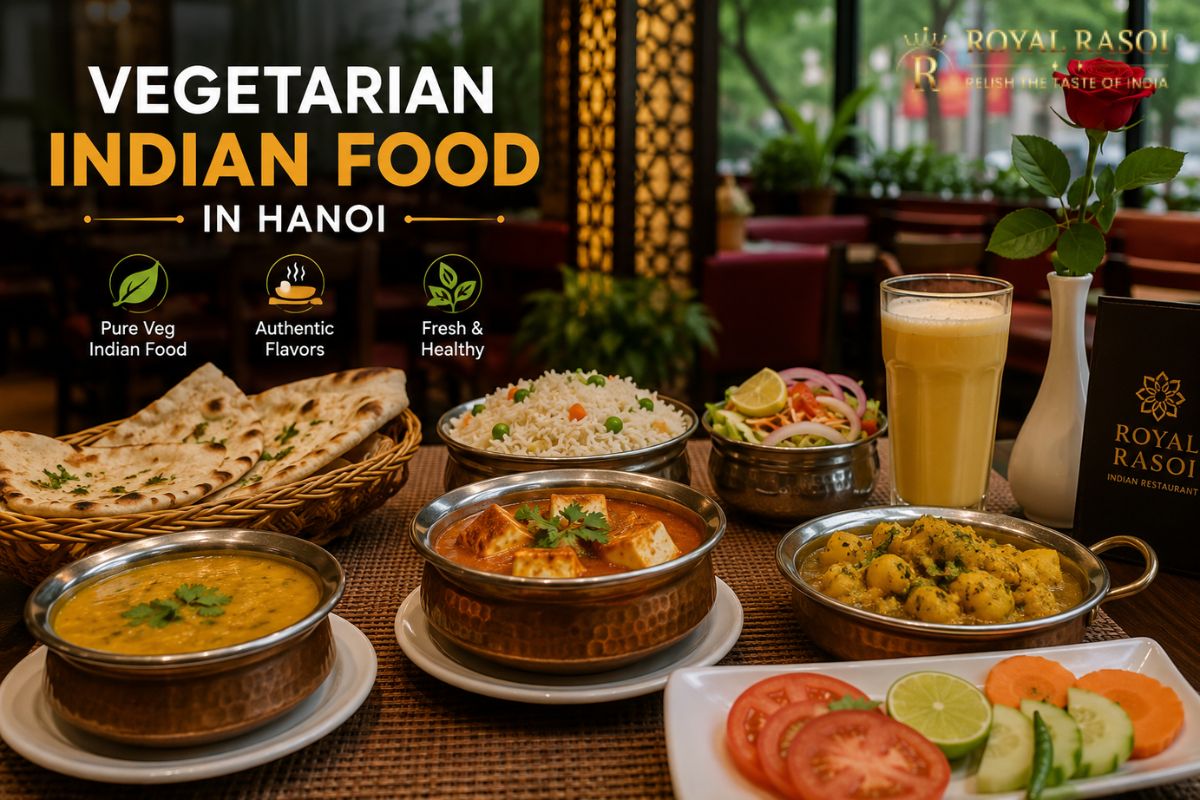
A well-made Jain thali in Hanoi should look like what you'd get at a good vegetarian place in India: dal, a dry vegetable preparation using non-root vegetables (beans, cauliflower, bottle gourd, that kind of thing), rice or roti, a small portion of curd or raita, and a pickle or chutney made without garlic.
What you shouldn't see is a regular vegetarian thali with the onions picked off the top. That's a shortcut kitchens unfamiliar with Jain rules fall back on, and it usually means the base gravy or tempering, the tadka, still had onion and garlic in it before those pieces got removed. Pulling out the visible bits doesn't undo what already went into the pot.
Kitchens that take this seriously, Royal Rasoi among them, cook the tempering separately for Jain orders and use hing (asafoetida) in place of onion and garlic for the aromatic base. It's a small detail, but it's usually the difference between a kitchen that understands the rules and one that's just guessing at them.
Delivery and takeaway considerations
Ordering vegetarian or Jain food for delivery carries its own risk in Hanoi. Once the food leaves the restaurant, there's no chance to clarify anything, so getting the order right the first time matters more than it does when you're sitting at the table.
A few things worth doing:
- Order through the restaurant's own line or app when you can. Third-party delivery platforms tend to compress special instructions into one small text box that gets skimmed, not read.
- If you're ordering a mixed batch for a group, confirm the packaging is kept separate for vegetarian and non-vegetarian food. Some kitchens box everything off the same prep line.
- For bigger orders, office lunches, events, reconfirm the Jain requirements by phone. Don't rely on a written note alone.
Conclusion
Finding proper vegetarian or Jain Indian food in Hanoi mostly comes down to knowing what to ask and where to look. Cau Giay has quietly turned into a strong option for this, largely because it feeds people who eat this way every day, not once on a trip, and that kind of regular demand keeps kitchens honest about the details. If you're narrowing down the best vegetarian Indian restaurant in Cau Giay for your next meal, start by asking how their Jain kitchen actually works, and let the answer decide it, not the menu on its own.
Frequently asked questions
1. Is all Indian food in Hanoi automatically vegetarian-friendly?
No. Indian menus here typically mix vegetarian and non-vegetarian dishes, same as menus in India. You still need to state your requirements clearly when you order.
2. What's the easiest way to explain Jain food to non-Indian staff?
Just say "no onion, no garlic, no root vegetables like potato or carrot." That lands better than the word "Jain" on its own for staff who haven't heard the term before.
3. Can I get a Jain thali without pre-ordering?
At places with a dedicated Jain menu, usually yes. Elsewhere, calling ahead saves you from a long wait during busy hours.
4. Does Cau Giay actually beat the Old Quarter for this?
Mostly, yes, mainly because it serves a resident Indian community rather than one-off tourist traffic, and that pushes restaurants to keep their vegetarian standards consistent.
5. Are Jain meals pricier than regular vegetarian ones?
Not by much, if at all. Any difference usually comes from the extra prep time for cooking separately, not from the ingredients themselves.
6. I'm vegetarian but not Jain. Is there anything I should still watch for?
Nothing specific to your diet, but it's still worth asking whether the oil and pots are shared with non-vegetarian cooking if that's a concern for you.
7. Is asafoetida always the onion-garlic substitute in Jain cooking?
In most kitchens that do this properly, yes. It gives a similar aromatic base without breaking Jain rules.
8. Can I just trust the online reviews to find a good Jain restaurant?
Only partly. Reviews are decent for general food quality, but they rarely mention cross-contamination or how the tempering is handled, so it's worth asking directly no matter what the star rating says.