-


-
 Royal Indian Elegance DiningAuthentic Indian Restaurant in Hanoi at Grand Plaza Hotel
 -
 A Royal Taste of India,Now in the Heart of Hanoi.
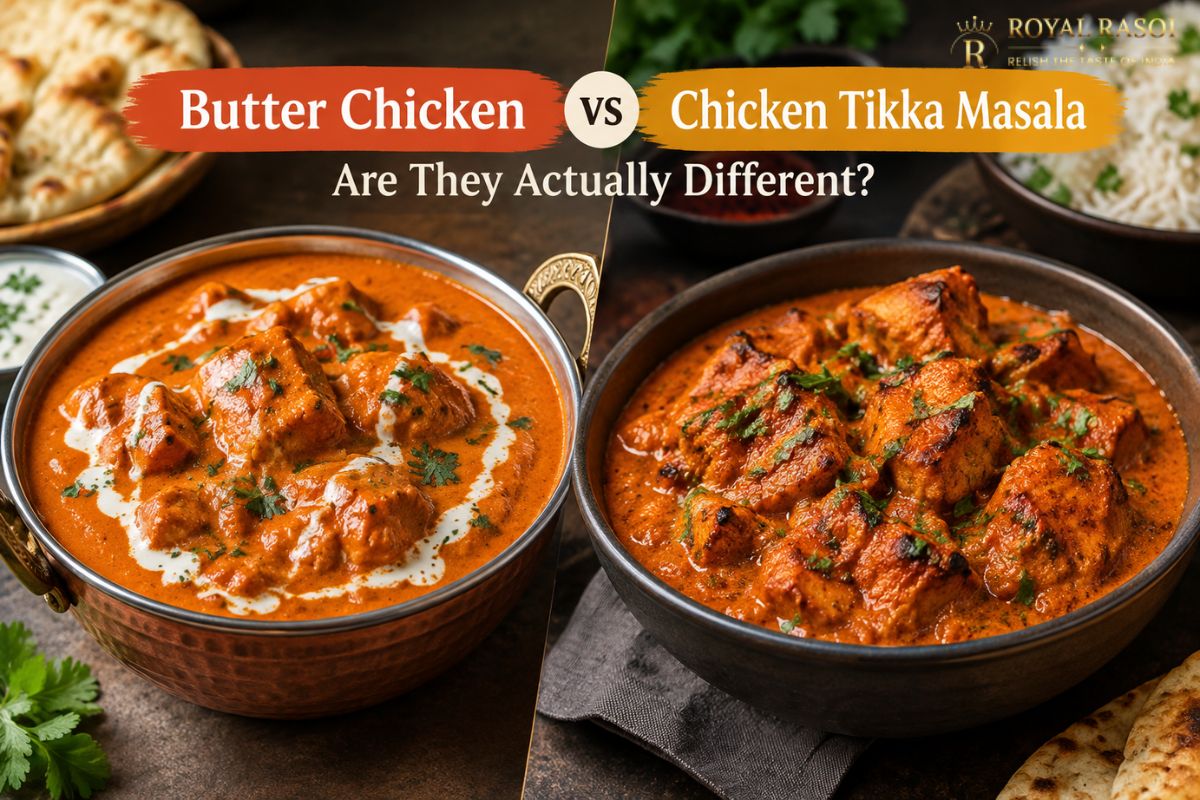
Butter Chicken vs Chicken Tikka Masala: Are They Actually Different?
Table of Contents
- Key takeaways
- Where does each dish actually come from?
- The cooking process: where the real differences show up
- Flavor, texture, and color compared
- Butter chicken vs chicken tikka masala: side-by-side comparison
- Common mistakes people make when ordering either dish
- Where to taste both the right way in Hanoi?
- Expert tips for choosing between the two
- Conclusion
- Frequently asked questions
While butter chicken may seem like another name for tikka masala, it is actually quite different in taste and preparation. While butter chicken originated at Moti Mahal in Delhi in 1947 and uses leftover tandoori chicken cooked in a rich tomato-butter sauce, tikka masala is believed to have originated at Shish Mahal in Glasgow in the 1960s or 1970s. The main distinguishing factors separating these two cuisines are:
- Sauce: Butter chicken sauce is sweeter and creamier, while tikka masala sauce has a more pungent taste.
- Origin: One is Indian, and the other is a British-Indian invention.
- Marinade: Chicken tikka masala is always kept in marination for a longer time, usually containing more chili powder as compared to butter chicken.
Therefore, be it your first visit or it is not your first time at a butter chicken restaurant in Hanoi, this distinction is worth knowing even if the menu may not mention it.
Key takeaways
- In 1947, butter chicken came into existence in Delhi; tikka masala most probably originated after butter chicken.
- Although both dishes have chicken cooked in the tandoor, their sauces, spices and marinades differ.
- A traditional curry restaurant in Hanoi serves these two dishes as separate recipes.
- Use butter chicken for something creamy, or tikka masala for something spicy.
Where does each dish actually come from?
Butter chicken's origin isn't restaurant mythology dressed up for a menu blurb. It's documented well enough to hold up. After the 1947 Partition, Kundan Lal Gujral moved his restaurant, Moti Mahal, from Peshawar to Delhi. Tandoori chicken was already the draw there, but without refrigeration, leftover pieces dried out by the next day. Gujral's solution was simmering them in a gravy of tomatoes, butter, and cream. What started as a fix for wasted chicken turned into one of the dishes people now associate with Indian food anywhere in the world.
Chicken tikka masala's history is messier, though a version of it keeps surfacing. The most repeated account credits Ali Ahmed Aslam, a Pakistani-Scottish chef at Shish Mahal in Glasgow, with putting it together sometime in the 1960s or 70s, after a customer complained that plain chicken tikka was too dry. Aslam is said to have improvised a sauce with tomato, cream, and yogurt right then. Britain's own Foreign Secretary called it the country's "true national dish" back in 2001. Whatever you think of that claim, it says something about how attached the UK is to a dish that has nothing to do with Indian kitchens.
Both stories, oddly enough, ended up in court. In 2024, Moti Mahal's family filed a 2,752-page lawsuit against a rival Delhi chain, Daryaganj, over who actually invented butter chicken, asking for roughly ₫6,257,400,000 VND in damages. It's still unresolved as far as anyone can tell. Chicken tikka masala's authorship has never been settled either. Several chefs across the UK have claimed the credit at different points, and none of them can really prove it.
The cooking process: where the real differences show up
Both dishes start the same way. Chicken gets marinated in yogurt and spices, then cooked in a tandoor. That's roughly where the overlap stops.
Butter chicken's marinade stays mild, usually just yogurt, ginger, garlic, and a modest amount of garam masala. Once the chicken is roasted, it goes into a gravy of tomato purée, butter, and cream, simmered down until it thickens into something smooth and sweet. Kitchens that actually care will strain that gravy so it comes out silky instead of chunky.
However, tikka masala's marinade carries more chili and gives the chicken a deeper red before it even hits the tandoor. After roasting, the pieces go into a sauce that still leans on tomato and cream, but with more ground spice worked in: turmeric, cumin, extra chili powder, which gives it a rounder, hotter profile than butter chicken's sweetness.
If a place serves you two bowls that taste almost identical, something's off. Either they're running the same base gravy for both (a common shortcut), or they genuinely don't know the difference between the two dishes. Worth noticing either way. But the best tandoori chicken in Hanoi gives you another experience.
Flavor, texture, and color compared
Butter chicken tends to be pale orange, thick, and mellow. The sweetness from tomato and cream hits first, and the spice shows up later as background warmth rather than anything sharp.
Moreover, chicken tikka masala usually runs a deeper red-orange, thinner in body, with the chili more upfront. The tandoori char on the chicken tends to stand out more too, since the marinade sits longer and often uses more paprika or Kashmiri chili for that color.
Neither dish is strictly "the spicy one" or "the mild one." A kitchen can dial either up or down. But by default, most cooks still treat butter chicken as the safe, comforting option and tikka masala as the one with a bit more edge to it.
Butter chicken vs chicken tikka masala: side-by-side comparison
| Aspect | Butter Chicken | Chicken Tikka Masala |
|---|---|---|
| Origin | Delhi, India (1947) | Glasgow, Scotland (1960s–70s) |
| Creator | Kundan Lal Gujral, Moti Mahal | Widely credited to Ali Ahmed Aslam |
| Marinade | Yogurt, ginger, garlic, mild spice | Yogurt, more chili, stronger red color |
| Sauce base | Tomato, butter, cream | Tomato, cream, more ground spice |
| Flavor | Sweet, mellow, buttery | Tangier, spicier, sharper |
| Texture | Thick, smooth, velvety | Slightly thinner, more visible spice flecks |
| Best for | First-time curry eaters, kids | Diners who want more heat and complexity |
Common mistakes people make when ordering either dish
Most of the confusion comes from menu labeling, not the food itself. A few patterns keep repeating:
- Assuming both dishes taste the same because they look similar in photos.
- Ordering butter chicken expecting heat, then feeling let down that it's mild. That's the point, not a flaw.
- Judging authenticity by color alone. A deep red tikka masala isn't automatically spicier. Some kitchens just use paprika for the look of it.
- Not asking the kitchen which dish marinates longer. A decent North Indian restaurant in Hanoi should be able to answer that without pausing to think.
Where to taste both the right way in Hanoi?
Hanoi's Indian food scene has grown to the point where you no longer have to guess your way through a translated menu to find something real. What separates a genuine, authentic curry restaurant Hanoi regulars keep going back to from a generic one usually comes down to one thing: whether the kitchen treats butter chicken and tikka masala as two different recipes, or just pours the same sauce under two names.
At Royal Rasoi, both dishes are made from scratch. The tandoor is actually used, not just mentioned on the menu for effect, and the marinades are kept separate rather than batched together to save time. That's also where the tandoori side of the menu holds up; anyone hunting for the best tandoori chicken in Hanoi tends to judge it on char, moisture, and how well the spice sticks to the meat, not just how red it looks.
If you're trying to settle on the best butter chicken restaurant in Hanoi, ask one simple question before you order: is the butter chicken gravy made fresh, or is it a shared base sauce doing double duty? The answer usually tells you everything else you need to know about the kitchen.
Expert tips for choosing between the two
- New to Indian food? Start with butter chicken. It's forgiving and rarely misses.
- Already like heat? Order tikka masala and ask for it a notch spicier than default.
- Butter chicken pairs well with garlic naan. The sweetness needs something plain to balance it.
- Tikka masala works better with plain rice than naan, so the sauce isn't fighting another rich flavor.
- Don't judge a kitchen off one dish. Order both in the same visit and compare the marinades yourself.
Conclusion
Butter chicken and chicken tikka masala end up lumped together because they look alike on a plate and share a tandoor-cooked start. But one came out of a Delhi kitchen solving a leftovers problem in 1947, and the other was built in Glasgow decades later for a completely different set of taste buds. Once you know what to actually look for- sauce texture, spice level, how long the chicken marinates- telling them apart stops being a guessing game.
For anyone in Hanoi still deciding where to try either dish properly, Royal Rasoi keeps both recipes separate the way they're meant to be. That alone is usually the simplest test of whether a kitchen knows what it's doing.
Frequently asked questions
1. Is butter chicken the same as chicken tikka masala?
No. They share a tandoor-cooked base but differ in sauce, spice level, and origin. Butter chicken is Indian; tikka masala is British-Indian, invented decades later.
2. Which dish is spicier?
By default, tikka masala usually carries more chili. Butter chicken is built to stay mellow and sweet, though either can be adjusted by the kitchen.
3. Where was butter chicken invented?
Delhi, in 1947, at Moti Mahal, after chef Kundan Lal Gujral turned leftover tandoori chicken into a tomato-butter gravy rather than let it go to waste.
4. Is chicken tikka masala really British?
Most accounts trace it to Glasgow in the 1960s or 70s, created for local tastes rather than adapted from anything already cooked in India.
5. What should I order at a North Indian restaurant in Hanoi if I've never had either dish?
Start with butter chicken. It's milder, creamier, and a safer first try than tikka masala's sharper spice profile.
6. Does the sauce color tell you which dish is spicier?
Not reliably. Some kitchens use paprika for a deep red color without adding much actual heat, so color alone doesn't tell you much.
7. What makes an authentic curry restaurant Hanoi diners trust?
Separate marinades and gravies for each dish, a tandoor that's actually used, and a kitchen that can explain the difference without hesitating.
8. Is one dish healthier than the other?
They're close. Both rely on cream and butter. Tikka masala is occasionally lighter when a kitchen uses less cream to balance the extra spice.
9. What pairs best with butter chicken?
Garlic naan works well. Its richness balances the sauce's sweetness instead of competing with it.
10. How do I find the best tandoori chicken in Hanoi?
Look for char on the outside, moist meat inside, and a marinade that clings rather than washing off. That combination usually means the tandoor's being used properly.